

Creating Bloomy Force — Letting Organic Shapes Grow Naturall
There are paintings that are planned… and paintings that arrive.
Bloomy Force became the second kind.
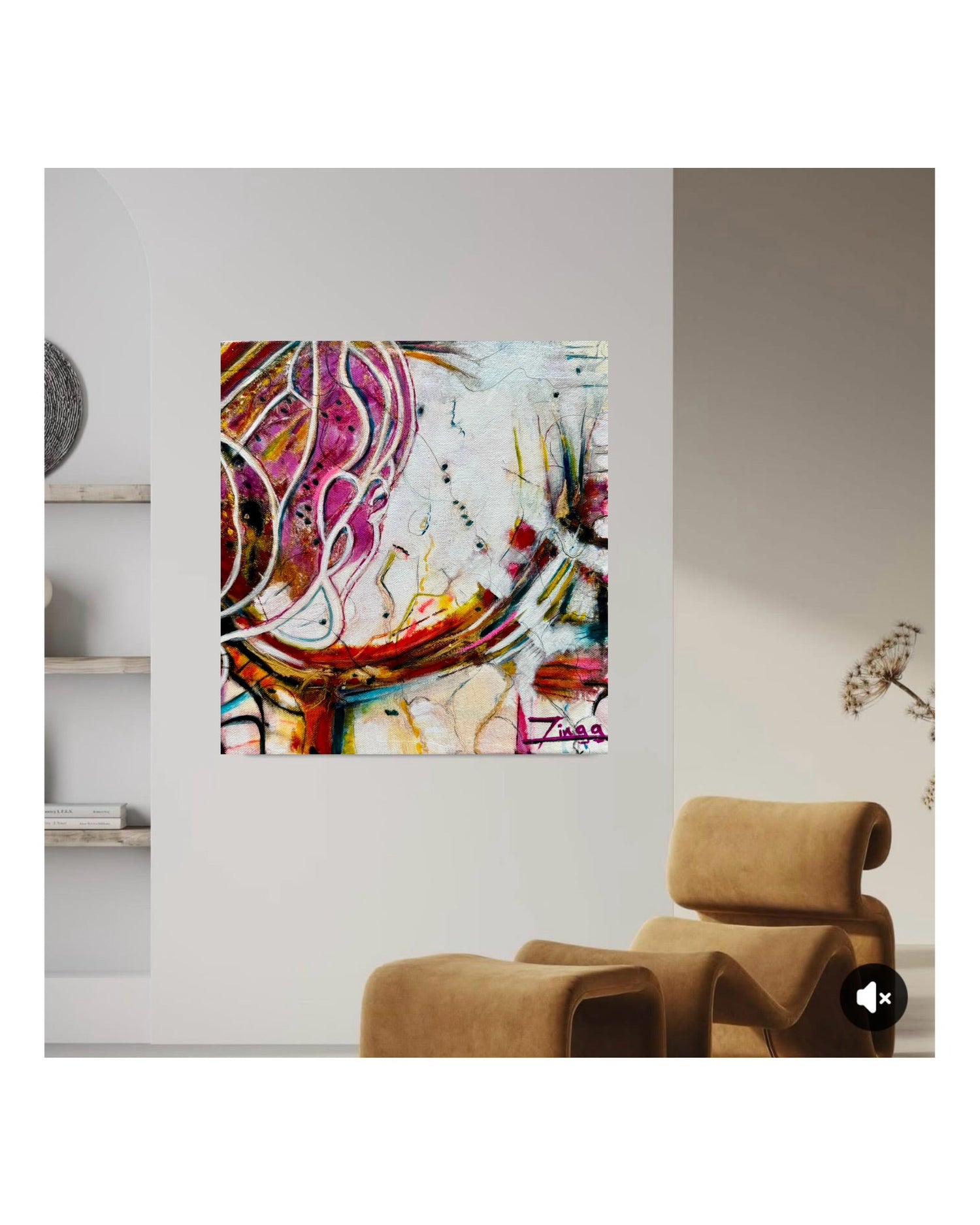
I didn’t begin with a sketch or a fixed composition. Instead, I started with movement — loose gestures placed gently on the surface, almost like planting seeds. From the very first marks, I allowed the painting to guide the next decision. Each shape suggested another, and the image slowly revealed itself over time rather than being forced into place.
Beginning with Organic Shapes
I wanted the forms to feel alive, not designed.
So instead of drawing objects, I built soft, irregular shapes — curves that swell, pause, and breathe. Organic forms are important because they feel familiar to the eye without needing to represent anything specific. They hint at petals, bodies, growth, water, and memory all at once.
Nothing in Bloomy Force is perfectly symmetrical.
That was intentional.
Nature never repeats itself exactly, and when a painting reflects that unpredictability, the viewer relaxes into it.
Developing Slowly — The Painting Sets the Pace
This work was created over many sessions.
I would paint, step away, and return later — sometimes hours, sometimes days. Allowing layers to settle changes how the next layer behaves. Edges soften, colors shift, and unexpected relationships appear.
Working slowly prevents over-control.
Instead of correcting the painting, I listened to it.
Many of the most noticeable shapes only appeared after earlier layers partially disappeared beneath new color. The history remains underneath, quietly influencing the surface.
Warm Foreground, Cool Background
One of the main emotional structures in Bloomy Force comes from temperature contrast.
The foreground carries warmth — soft reds, earthy pinks, and gentle oranges. These tones move forward visually and feel close, almost touchable.
Behind them, cooler hues recede. Blues and cooler neutrals create breathing room and depth, allowing the warmer shapes to bloom outward.
This contrast creates tension and calm at the same time:
-
Warm = presence, growth, life
-
Cool = atmosphere, distance, quiet
The painting becomes a space rather than a flat image.
Letting the Image Emerge
I never tried to make the painting look like flowers — yet viewers often sense blooming movement.
That’s the purpose of abstraction for me.
When forms remain open, the viewer participates. The eye completes what the brush only suggests. Bloomy Force isn’t describing nature; it’s recreating the experience of watching something grow.
Final Thoughts
This piece taught me patience.
Instead of finishing quickly, I allowed uncertainty to exist inside the process. The painting matured gradually, layer by layer, until balance appeared naturally rather than being imposed.
Bloomy Force is about quiet energy — the moment just before something opens.
Not a depiction of bloom…
but the feeling of becoming.
—
Explore the finished work at theresazingg.com
Leave a comment
This site is protected by hCaptcha and the hCaptcha Privacy Policy and Terms of Service apply.